Media: Please click on smaller photos on this page to get higher resolution images.

Happy Birthday to Robert Burns:

The Story Behind Barre’s Landmark Statue


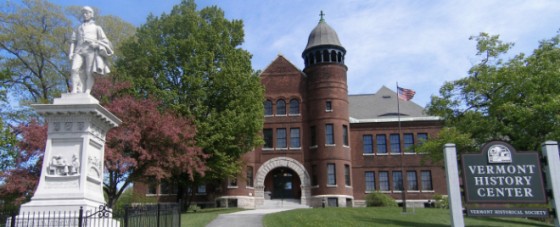
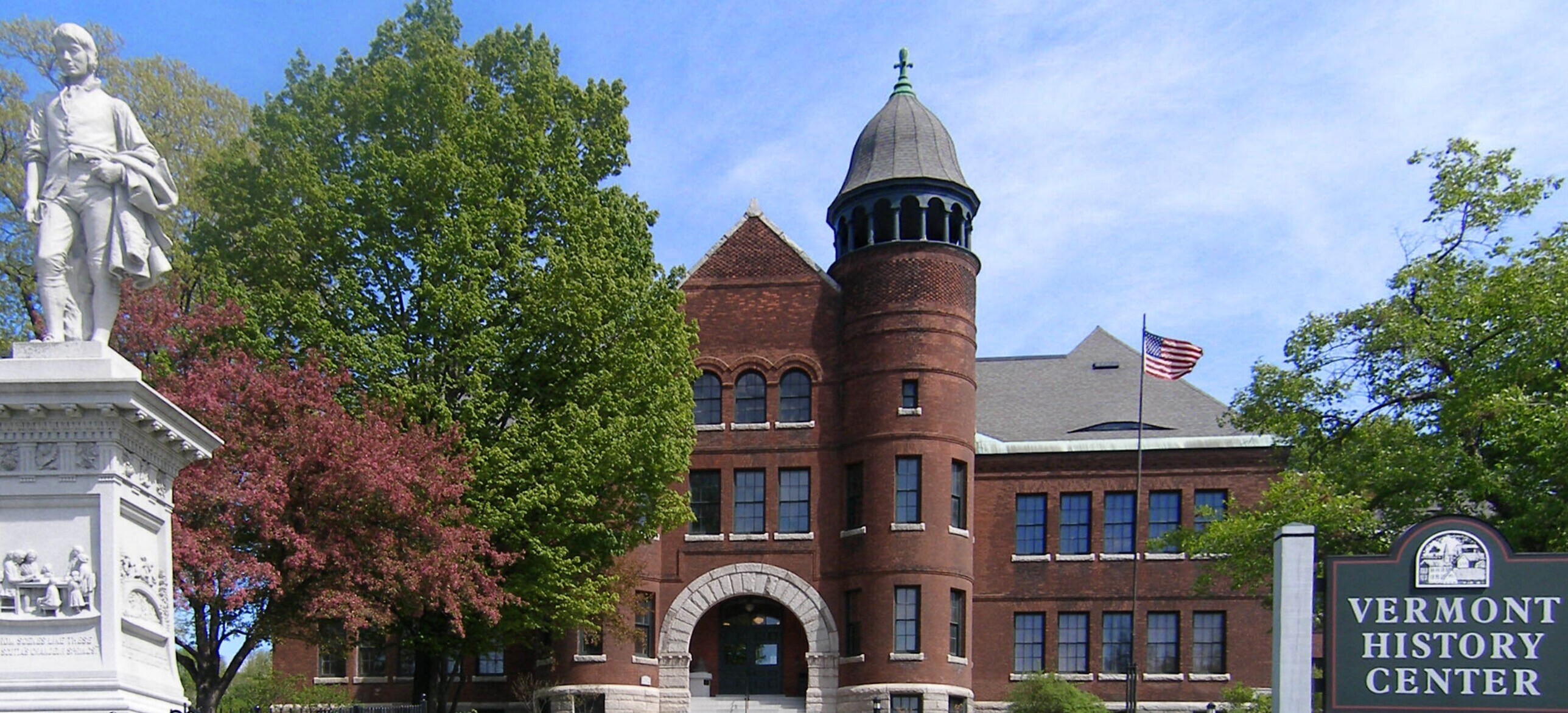
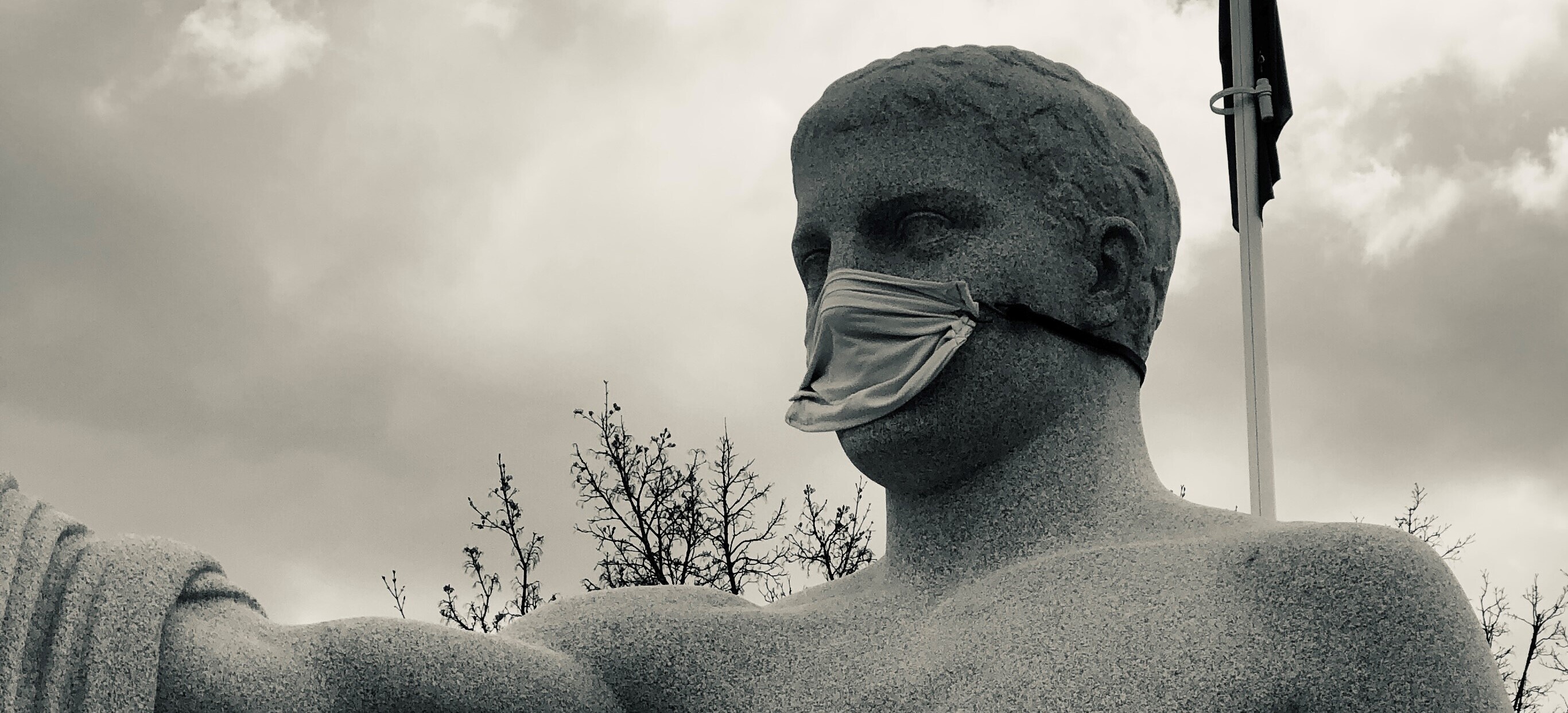
BARRE:  The statue of Robert Burns, erected in 1899, continues its meditative vigil over the town of Barre, in front of the Vermont Historical Society, on Washington Street. This January 25th marks the 250th birthday of Robert Burns, Scotland’s most famous poet.

Who was Robert Burns?

Regarded as a pioneer of the Romantic movement, Robert Burns became a great source of inspiration to the founders of both liberalism and socialism.

Celebrations of his life and work became nearly a national cult during the 19th and 20th centuries, and his influence has since been strong on Scottish literature.

 Born in 1759 in South Ayrshire, Scotland, Robert Burns grew up poor. Burns’ father, a struggling farmer, did his best to educate his son, and Burns developed a passion for reading and languages. Handsome, charming, and a success with the ladies, Robert Burns attempted farming and business, and failed at both. His genius was in writing poetry and songs, and revamping Scottish folktales. His most famous song, set to the tune of an old Scottish folk song, "Auld Lang Syne” is still sung today at New Year’s. Robert Burns’ poetry celebrated country and town life, using both English and Scottish vernacular. Burns wrote with respect, affection and humor. He satirized the snobbish and superior-acting, and composed beautiful love poems.

Burns’ first book of poems, published in 1786, achieved some financial success. Unfortunately, the proceeds were ultimately used up in failed farming investments. He fathered several illegitimate children over the course of time, and ended up marrying Jean Armour, after they had already had twin children together. By his mid-thirties, Burns’s health began to decline. Burns lacked moderation in his use of alcohol, and experienced depression, and he died at age 37, from a blood infection thought to have been the result of a tooth extraction.

Burns’ poems and songs live on, and to this day, they win the hearts of people worldwide. Scots still celebrate January 25 with a Burns Night Supper, including whisky and toasts to the lassies. There are Robert Burns Clubs, Robert Burns stamps, currency with his image, and many statues and memorials.

Why a Burns Sculpture in Barre?

 Beginning in 1880, Scottish granite workers arrived in Barre as the town’s granite industry burgeoned. By the turn of the century, Scots accounted for twenty-percent of Barre’s population. The Burns Club of Barre, founded in 1890, was a natural outgrowth of this influx.

On January 25, 1897, members of the Burns Club met and decided a commemorative statue should be erected in Barre in celebration of the 100th anniversary of Burns’ death. The statue was conceived and modeled by J. Massey Rhind. James B. King of Milford, N.H. modeled the four panels. Samuel Novelli carved the statue, and Elia Corti, considered one of the finest sculptors in Barre, carved the panels. In 1901, Novelli and Corti joined together to form a carving studio noted for its fine sculpture.

 The unveiling ceremony was a dramatic affair on July 24, 1899.  Miss Florence Inglis, dressed and crowned as the Scottish Muse, drew a cord and presented the statue to more than 10,000 people in attendance. The Burns monument, dedicated to the poet from Scotland, thus became the first civic monument in Barre.

The monument itself stands 22 feet and 4 inches above the foundation, and the statue is 9 feet 4 inches in height. The high- and low-relief panels on the sides, demonstrating the artists’ exemplary sculpting skills, depict scenes from three of Burns’ famous poems, “The Cotter’s Saturday Night,” “To a Mountain Day,” and “Tam O’Shanter’s Ride.” The fourth panel shows Burns’s cottage in Ayr,  Scotland. According to a publicity pamphlet from the 1890s, the sculpture “is considered one of the world’s art treasures.”

The statue of Burns shows the poet returning from his day’s toil, dressed in the garb of a ploughman, sleeves rolled up, bareheaded, his coat on his arm, eyes on the ground and seemingly in thoughtful meditation.

 The Vermont Historical Society welcomes guests to view the statue, and has created an informational hand-out, located in the front entrance behind the statue, to introduce viewers to the statue and to Robert Burns. The Vermont Historical Society is located at 60 Washington Street in Barre.

The Vermont Historical Society is a nonprofit organization with offices in Barre and the Vermont Historical Society Museum in Montpelier, engaging both Vermonters and "Vermonters at heart" in the exploration of our state's rich heritage. Its purpose is to reach a broad audience through outstanding collections, statewide outreach, and dynamic programming.


A Robert Burns Song:  Auld Lang Syne
(“auld lang syne”  literally means "old long since", but a more idiomatic English translation would be something like "long long ago")

Auld Lang Syne

Should auld acquaintance be forgot,
And never brought to mind ?
Should auld acquaintance be forgot,
And o' lang syne ?

CHORUS:

For auld lang syne, my jo,

For auld lang syne,

We’ll tak a cup o’ kindness yet,

For auld lang syne.

And surely ye’ll be your pint-stowp !
And surely I’ll be mine !
And we’ll tak a cup o’ kindness yet,
For auld lang syne.

CHORUS

We twa hae run about the braes,
And pu’d the gowans fine ;
But we’ve wander’d mony a weary foot,
Sin auld lang syne.

CHORUS

We twa hae paidl’d i' the burn,
Frae morning sun till dine ;
But seas between us braid hae roar’d
Sin auld lang syne.


CHORUS

And there’s a hand, my trusty fiere !
And gie's a hand o’ thine !And we’ll tak a right gude-willy waught,
For auld lang syne.


Home | Museum | Library | Education | Programs | Plan a Visit | Local History | Store | News | About VHS | Contact | Webmaster | Hours & Locations | Privacy Policy | Subscribe to ENews

Vermont Historical Society ♦ (802) 479-8500 ♦ 60 Washington St., Barre, VT 05641

© 2011 Vermont Historical Society